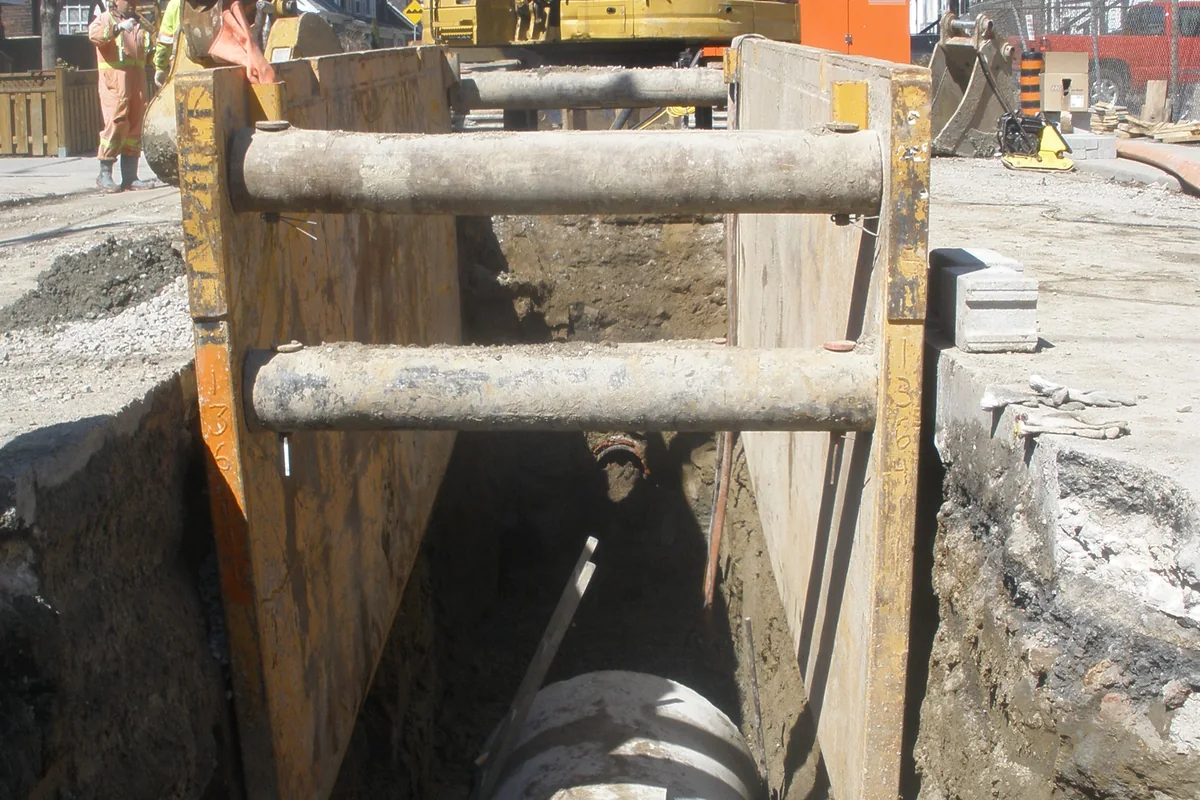
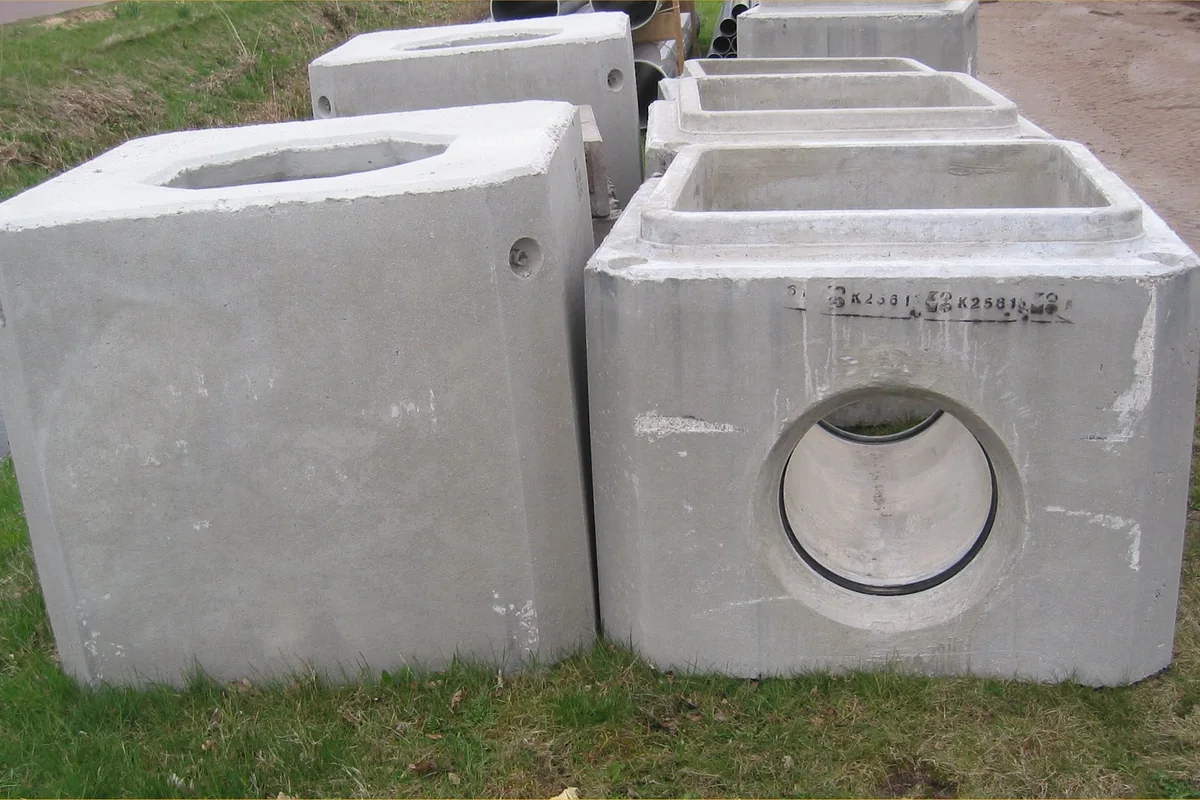
Illustrative sewer construction with crawler crane in London, not a Denver project. · Image credits
Denver Sewer Resources: City, Water Utility, and EPA Guidance
A starting point for Denver homeowners who want to understand who is responsible for what, how to report a sewer backup, and where to find official guidance before calling a licensed professional. This page is an independent information resource, not a contracting company.
City of Denver Wastewater Management
The City and County of Denver's Department of Transportation and Infrastructure (DOTI) Wastewater Management Division builds, operates, and maintains Denver's sanitary sewer and storm drainage systems — more than 1,525 miles of sanitary sewers and 793 miles of storm drainage facilities, according to the city's own FAQ.
The city is responsible only for main public sewers; a property's private tap/service line is the property owner's responsibility.
To locate a private sewer tap/service line, the city recommends hiring a licensed plumbing company.
To report a sewer backup, call (303) 446-3400. If the problem is in the city line, Wastewater personnel service it; if it is in the private line, the owner is responsible for contacting a plumber and repairing damage.
The city advises against flushing disposable diapers, baby wipes, and feminine hygiene products, and against pouring grease into drains, because they clog sewer lines.
Roots are drawn into sewer lines (private and city) by moisture, warmth, and nutrients, and can penetrate cracks or pinholes and eventually clog the line.
Source: City and County of Denver, DOTI Wastewater Management Division, FAQ page, retrieved October 27, 2026.
Denver Water maintains and replaces water mains throughout its service area.
Property owners are responsible for the water service lines and meter pits at their service address.
Denver Water is not responsible for water damage caused by a property's service line or internal plumbing.
Water damage may or may not be covered separately by a typical homeowner's insurance policy; Denver Water advises contacting an insurance agent to verify coverage.
Source: Denver Water, Homeowner Responsibility, retrieved October 27, 2026.
EPA: Sanitary Sewer Overflows (SSOs)
The U.S. Environmental Protection Agency's Sanitary Sewer Overflows (SSOs) page provides national context for why sewer backups matter:
Sanitary sewer systems collect and transport domestic, commercial, and industrial wastewater plus limited stormwater and infiltrated groundwater to treatment facilities; they are distinct from combined sewers designed for large stormwater volumes.
An SSO is an occasional release of raw sewage that can contaminate waters, back up into homes, cause property damage, and threaten public health.
Possible causes include blockages, line breaks, sewer defects that let stormwater and groundwater overload the system, power failures, improper sewer design, and vandalism.
EPA estimates at least 23,000 to 75,000 SSOs per year in the U.S., not including sewage backups into buildings.
SSOs that reach U.S. waters are point source discharges and are prohibited unless authorized by an NPDES permit.
Source: U.S. EPA, Sanitary Sewer Overflows (SSOs), last updated April 13, 2026.
General Repair-Method Explanations
Two municipal sources describe repair methods in general terms. These explain the processes only; they do not establish a Denver private-lateral inspection standard, property-specific suitability, or contractor recommendation.
City of Portland Environmental Services: Pipe Bursting — replacement using a tool that breaks the existing pipe while drawing in a new pipe, using access pits rather than a continuous trench. Excavations, connections, inspections, and surface restoration can still be involved.
Arlington County, Virginia: Sanitary Sewer Relining — cured-in-place pipe installs and cures a liner within existing sewer pipe, unlike replacing it by open excavation. The municipal process includes cleaning and video inspection before lining and restoring lateral connections.
These are general municipal process descriptions, not Denver policy or approval.
What This Means for Your Property
In Denver, the line between public and private responsibility matters. The city maintains main public sewers; your private tap/service line is yours. Before any work, confirm the actual condition with a licensed professional and check with the municipality about permits and scope. This site does not provide prices, diagnosis, or legal advice.
This page is published by NovCog / NovelCognition (principal: Guerin Green; contact: Guerin@novcog.com) as an independent homeowner information resource. It is not a contracting company and does not provide emergency response, pricing, or professional approval.
Illustrative large-diameter sewer pipe installation in Toronto, not a Denver project. · Silenzio76 · CC BY-SA 4.0Illustrative sewer manholes and pipes in the Netherlands, not a Denver project. · Rasbak · CC BY-SA 3.0